Blog > What Is the Purpose of Sensors in Perimeter and Building Security?
What Is the Purpose of Sensors in Perimeter and Building Security?
Access ControlFire and SecurityVacant Property Services
Written by Daniel MeeajanePublished: 23rd February 2024Last update: 23rd June 2026
Security alarms, CCTV cameras and perimeter security systems all have one thing in common – they are designed to prevent intruders from accessing your property or site. To function, alarms need to have a form of sensor which triggers the alarm or alert based on a movement or activity, such as the presence of a person, tripping an alarm on a closed door, or breaking glass.
While there are myriad types of building and perimeter security systems, all must incorporate sensors that can detect motion, tampering, or the presence of a vehicle and differentiate these triggers from naturally occurring noises or movement due to wind, rain or wildlife, for example.
In this article, we’ll explain how different types of security detectors work and the purpose of sensors in devices and alarm systems you might consider installing to reinforce the security of your premises.
Contents
Key takeaways
Security sensors detect movement, vibration, heat, sound and environmental changes, allowing alarms to trigger only on genuine threats rather than causing false call-outs from wildlife or weather.
Advanced sensors can distinguish between a person climbing a fence, a vehicle approaching an unauthorised entry point, and naturally occurring disturbances, making them the foundation of any layered perimeter security strategy.
Every building and site requires a professional risk assessment before sensors are specified, as the most effective combination of motion detectors, vibration sensors and glass break detectors depends on the nature of the risk and the layout of the property.
Perimeter and Building Security Sensors Explained
As we’ve indicated, there are numerous sensors that function based on variable parameters. Most advanced security systems can be programmed according to your requirements, ensuring that your alarms or surveillance networks will only sound an alarm, transmit an alert notification or inform your security response team when a defined activity occurs.
That could include:
Detecting an approaching vehicle to the rear of your site perimeter.
Identifying a person or several people outside of opening hours.
A door, window or lock being opened, or a seal being broken.
The presence of smoke, heat, water, fire or gas.
Automatic alarms if a device is moved, disturbed or otherwise interrupted.
Sensors can be activated based on sound, movement, vibration, temperature, or more technical parameters such as body heat signatures – depending on the most prevalent risks and the nature of your business or building.
They are also used for non-security purposes, such as determining where a member of staff is, or monitoring personnel for productivity or PPE compliance tracking.
Why Do Perimeter and Building Security Systems Rely on Sensors?
In the vast majority of scenarios, it is impossible for on-site security guards to have 24/7 visual sight of every part of your premises. Security patrols, access controls, gated barriers and staffed entry points are certainly great ways to improve security safeguards but cannot provide 100% coverage of each potential entry point.
For example, if a compound has perimeter fencing around the boundary and a gated entrance point staffed by a trained security guard, any authorised visitors will have their credentials verified before being permitted entry, and it is unlikely personnel will ever attempt to enter the site from any other point.
However, an intruder could scale a wall, cut through a fence, or use force to access the site from the furthest point away from the guarded station without being detected, seen or apprehended.
While this is a simplified illustration, it demonstrates why sensors are so vital. Surveillance and alarm systems rely on having a method of detecting unusual or suspicious activity to direct security teams to investigate.
In short, an advanced alarm system equipped with sensors acts as an always-on security guard and will raise the alert immediately when anything outside of the norm happens and requires further action.
Types of Alarm System Sensors
Each security device or installation works differently, and the most suitable sensors for your property or business depend on a thorough, professional risk assessment. This appraisal process helps security consultants determine where your greatest risks lie and recommend the best ways to mitigate or prevent them from occurring.
As a few examples:
Motion detectors use infrared technology to detect movement, which can be customised to disregard movement beneath a certain size to eliminate false alarms caused by local wildlife.
Environmental detectors can pick up changes to air quality, such as ash particles, or other factors like water, gas and chemicals.
Vibration detectors often work based on algorithmic analysis, which can assess whether vibrations are caused by a person climbing, walking or crawling, a vehicle, or another suspicious activity such as cutting through wires or fencing.
Glass break detectors are commonly installed on windows and within entrance doors to raise the alarm when the surface is broken – a similar technology is used within door or window alarms where the alarm will sound if the two parts of the sensor are disconnected.
Many of these security detection sensors use infrared light to identify movement in any low-light settings, including overnight and away from light sources. Adding additional functions such as photo verification or correlation analysis can further improve the accuracy of your alarm sensors, where devices act in real time to compare signals and determine whether there is a live incident underway.
Advanced security systems can be programmed to detect specific activities such as approaching vehicles, unauthorized personnel outside opening hours, or environmental hazards like smoke and heat, ensuring alarms only trigger on defined events rather than false alerts from natural occurrences.
Get a quote
Speak to the experts
Get an assessment
Get a quote
Choosing the Right Perimeter and Building Security Alarm Sensors
Every building, premise or business will benefit from an initial security evaluation to ensure you target your resources efficiently and determine the ideal placements and functions of your alarm sensors.
Below, we’ve summarised some of our most in-demand security devices and systems to clarify how they work and the sensors integrated into each solution.
inView Detect Perimeter Security
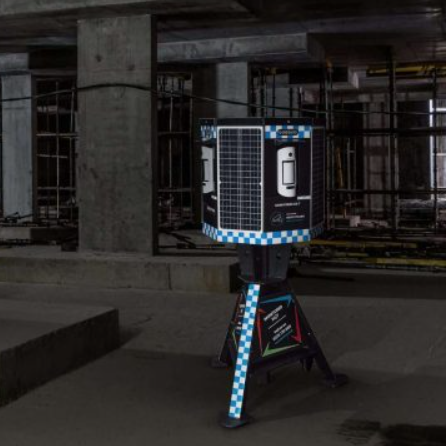
This wireless intruder detection system is portable and accessible and can be used in any position or placement where you have an elevated threat level. Operating with an autonomous power system, inView Detect is rapidly deployable and can be used in any environment, from a construction site to open land, to protect specific assets or items of equipment or positioned in a network around a wider perimeter.
Each intrusion detection unit offers 360-degree coverage and activates an alarm according to your security protocols when movement is detected, excluding triggers up to 80cm tall to eliminate false callouts.
Commercial Intruder Alarms
Our range of commercial intruder alarms is suited to any business or site, with a number of devices and integrated units that can identify movement, unexpected entry, fire and smoke, or when an item of equipment or machinery is moved or absent.
Depending on your programmed parameters, your intruder alarm can notify responders when a person is detected inside the perimeter, when a vehicle approaches an unauthorised entry point, or when any activity occurs when the site is not expected to be in use.
Each of these solutions incorporates advanced, customisable sensors and ensures that if anything untoward or suspicious occurs, you can react swiftly, with the flexibility to arm, disarm or remote access your security systems at any point.
Written by Daniel Meeajane
Business Development Director, Clearway Fire and Security
Daniel Meeajane is Business Development Director at Clearway Fire and Security, bringing strong commercial expertise alongside a detailed understanding of fire protection systems and industry standards.
Having contributed to a number of major projects and delivered successful outcomes, Daniel uses his knowledge and experience to drive awareness of effective fire protection solutions across a wide range of environments. His approach combines relationship-led business development with a clear understanding of technical compliance, operational requirements, and customer risk.
Daniel has a strong understanding of BS 5839-1, recognising the importance of compliant fire detection and alarm system design, installation, commissioning, and maintenance. He also keeps pace with the latest developments in fire technology, ensuring clients benefit from informed guidance, up-to-date solutions, and best practice across every stage of delivery.
Perimeter security is a key priority for thousands of businesses, organisations and private facilities, ensuring intruders cannot gain entry. However, it’s easy...
PIDS stands for Perimeter Intrusion Detection System, a category of security technology designed to detect unauthorised access at site boundaries. In practical...
Traditionally, site owners and business managers have concentrated their security efforts on physical buildings, entrance points, and doors or windows – leaving...
It looks like you’ve submitted your information in the wrong section of our website. No problem—if you’re looking to apply for a job, you can do so by viewing our current vacancies. Click below to find and apply for roles through the proper channel.