Blog > What are the Weak Access Points at a Construction Site?
What are the Weak Access Points at a Construction Site?
Site Security
Written by Gideon ReichentalPublished: 9th April 2024Last update: 9th August 2026
Building Our Economy
It is often said that the state of the construction sector reflects the health of our economy as a whole. What’s more, it’s a pivotal force behind growth; lots of cranes looming over the urban landscape – and we’re doing well.
Not much construction going on? Things may not be quite as rosy.
This is an exceptionally dynamic sector where building projects can be switched on or off at short notice.
Right now, it’s on the up.
Contents
Key takeaways
Construction sites have multiple weak access points including front gates, wide open spaces, and perimeter fencing that thieves actively exploit — inconsistent security standards are immediately visible to opportunistic criminals.
Dark spots, scaffolding, and outbuildings create concealed entry points that are difficult to monitor without adequate lighting, CCTV, and video verification alarms in place.
A professional security assessment is essential to identify site-specific vulnerabilities, as risks change throughout the project lifecycle and a single static strategy is rarely sufficient.
According to construction insights firm Glenigan, 2024 is likely to see the sector grow by 12%, with a further 3% on top of that in 2025. Yes, there are challenges – skills shortages, for example, but the building sector is still enormous and likely to remain so.
OK, so what’s the problem?
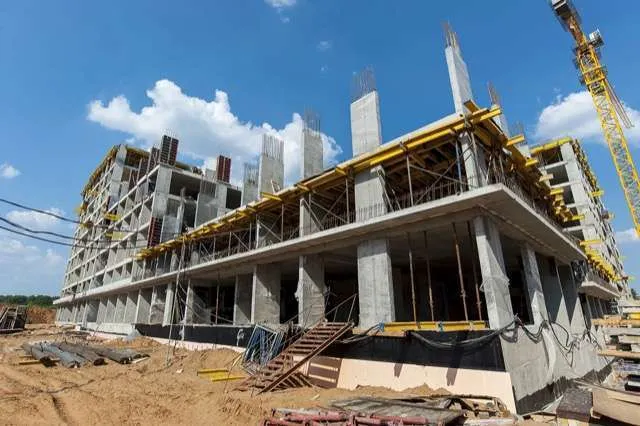
Nevertheless, with construction being the profitable industry that it is, there is a security issue at grassroots level: at the sites themselves. Building sites, characterised by their large and often open spaces, are wonderfully attractive to criminals and to thieves in particular.
Steal Me
Not to put too fine a point on it, even when empty or unoccupied there may be valuable assets sored on-site with an attractive re-sale potential.
Equally, there’s little risk of intruders being caught or even monitored without adequate site security. The following items can disappear into thin air, as if by magic:
Vehicles (and fuel syphoning)
Lighting and electricals
Construction materials – metals or cabling
Machinery
Tools
At a remote building site and in the darker months of winter, these risks are greater.
As an aside, the UK’s move from red to white diesel (the latter produces fewer emissions), has created a whole new set of challenges. Why? Because white diesel can be used in “ordinary” vehicles, thus making it an attractive currency due to rising fuel prices.
The knock-on effects can be really damaging. And, recovery rates for all of the above are low.
Not only is it expensive to replace these items, but it’s also time-consuming, leading to project and deadline delays. All these costs add up. Clearly, it’s getting too expensive, so cutting back site security appears to be the best way forward. Or, is it?
Cutting Corners – Never a Good Idea
Like insurance, you may not think you need effective security at your unoccupied building site, but you won’t need it until you do. And then, you will really need it.
It would be fair to say that, as vacant commercial property security specialists, Clearway is hardly non-partisan here. Yet, consider these sobering statistics:
According to Allianz Cornhill, the construction sector loses £800m a year due to theft, with the same amount again lost to vandalism and fire; therefore, experience tells us that investing in strong security measures is essential.
Did you know that a survey undertaken by the Chartered Institute of Building has revealed that an eye-watering 92% of respondents are directly affected by petty crime? Astonishingly, 21% stated that their building sites are robbed weekly.
It’s an ongoing issue which needs to be tackled.
What are the Weak Spots at a Construction Site?
Let’s examine where – or how – certain building site areas may be a little flimsy.
A variety of access points. Firstly, it stands to reason that the more access points there are, the more vulnerable site security can become. The sheer fact that there are comings and goings at different places, and that arrangements may regularly change as work progresses creates a degree of vulnerability. In addition, most thefts are opportunistic; inconsistent safeguarding standards are obvious to intruders, and they will find your “gaps”.
This leads us straight to:
The Front Gate
All too often, with high-vis jackets and hard hats, thieves really look the part without even trying too hard. You couldn’t tell the difference, and their brass neck is astounding.
They simply wander onto a construction site posing as workers, often unchallenged, to help themselves or check out the layout for a later spree. Inadequate, patchy access control gives them a free pass, which they willingly take.
The access points people miss are rarely the front gate. It's usually a gap in temporary fencing, an unlocked site cabin, or a delivery entrance left open during a shift change that gets exploited, which is why we always walk the full perimeter rather than just checking the obvious entrances.
Get a quote
Speak to the experts
Get an assessment
Get a quote
Large Open Spaces
Typically, construction sites cover wide stretches of land, which raises challenges regarding observing various goings-on and securing each and every corner. You can’t be everywhere all at once, and intruders will know this.
Around the Perimeter
Although it may have a clearly defined perimeter, the outside edges of a site may be more vulnerable than you think. Think of it like this: imagine a target with concentric circles.
There is less space for unauthorised access in the middle of a construction site (a “bullseye”). Around the perimeter, there is much more square footage to break through and more opportunities to discover unlit or insecure areas. Its size puts it in an exposed position. A perimeter fence can be scaled all too easily, especially if someone is nimble or has access to a ladder. And, without sufficient CCTV, lighting or video verification wireless alarms, the site is more defenceless than it should be.
Dark Spots
To expand on the above point, trees may overshadow a site’s perimeter fence or specific areas that back onto a dark alleyway. These are black spots that conceal thieves. Criminals shy away from well-lit places yet gravitate to hidden settings that keep them out of view.
Outbuildings
Bear in mind that not all construction sites focus on new development works.
The project may take place on an existing, unused commercial property with attached buildings. Thieves are canny and bold, and may be able to work their way in from a neighbouring premises, through a fire escape or an open window.
Scaffolding
Scaffolding is a valuable commodity to thieves, but it can also provide a convenient entry point into an unsecured construction site, especially if helpfully placed ladders are nearby. Protection beams are an added expense, but they could help to stop opportunistic incomers.
A Solution to the Problem
The construction industry is a target because, in many cases, the problem is as clear as day:
Security at building sites is just not strong enough most of the time.
Padlocks and chains are not the answer.
Clearway has the experience and expertise to protect your site and critical assets. An initial security assessment will reveal your specific weak spots, with detailed recommendations to lock down, deter, detect and deny entry. Then, the following solutions – and we provide all of these – could offer you the transformation and peace of mind you deserve:
Access controlsolutions for a clear, defined view of who is coming in and going out. Technology here can be as sophisticated as facial recognition.
Your security strategy should be ongoing. Remember that due to the constantly changing nature of this type of working environment, the risks we identify during the first phase of your project may not be so as it progresses. For example, you may require different or additional lighting in the winter.
Take Aways from Clearway
In our view, two things are apparent:
A construction site is a high-crime area, and
A security strategy should never be based on price alone.
Reducing theft with an in-depth security risk assessment and implementing fit-for-purpose measures could quickly regain your investment. Likewise, you may see a reduction in your insurance claims, and you’ll be able to maintain your reputation as a legitimate operation that takes safeguarding and protection seriously.
Our advice:
Understand your site-specific challenges, put both physical and technical security in place and mitigate your security threats to create a safer environment for all involved.
Contact Clearway for more information about how we can help.
Gideon is an experienced property specialist with almost ten years dedicated to the field of vacant property security and services. With a strong commitment to customer service and operational support, he has built extensive expertise in protecting vulnerable and unoccupied buildings through practical, risk-based security solutions.
His experience includes directly managing portfolios of more than 200 vacant properties, alongside senior management responsibility for wider portfolios exceeding 2,000 properties. This has given him a detailed understanding of the challenges involved in securing vacant assets, from preventing trespass, theft, vandalism, and arson to helping clients maintain compliance, reduce liability, and protect long-term property value.
Gideon has strong technical knowledge of the measures used to secure vacant properties, including steel security screens and doors, monitored alarm systems, CCTV, mobile response, site inspections, and temporary fire and life safety solutions. At Clearway, he supports the delivery of tailored protection strategies designed around the specific risk profile of each property, helping clients secure and manage unoccupied assets with confidence.
It looks like you’ve submitted your information in the wrong section of our website. No problem—if you’re looking to apply for a job, you can do so by viewing our current vacancies. Click below to find and apply for roles through the proper channel.