Blog > Using CCTV to Monitor, Capture and Prevent Vandalism
Using CCTV to Monitor, Capture and Prevent Vandalism
CCTV
Written by Daniel MeeajanePublished: 5th August 2026Last update: 5th August 2026
CCTV deters vandalism by making would-be offenders aware they are being recorded and increasing the perceived risk of identification, which causes most opportunistic vandals to move on before causing damage. When combined with remote monitoring and AI-powered analytics, a well-designed surveillance system protects commercial property, construction sites and vacant premises not only by recording incidents but by preventing them from happening in the first place.
This article explains how CCTV reduces vandalism through deterrence, how remote monitoring enables real-time intervention, what makes footage usable as evidence, and how AI analytics are changing the way organisations detect and respond to threats.
Contents
Key takeaways
Visible CCTV cameras significantly reduce vandalism by deterring opportunistic offenders who do not want to risk being identified.
Remote monitoring services allow operators to detect suspicious behaviour in real time and intervene before damage occurs.
High-resolution footage with accurate timestamps and a documented chain of custody is required for footage to be accepted as evidence by police and insurers.
AI analytics tools such as inView Detect can identify loitering, perimeter breaches and unusual behaviour patterns before an incident escalates.
How CCTV Acts as a Deterrent Against Vandalism
CCTV deters vandalism primarily through visibility. When a camera is clearly positioned at an entrance, a loading bay, a car park perimeter or along a fence line, it signals to anyone approaching that their actions are being recorded and that there is a real prospect of identification. Most vandalism is opportunistic rather than planned. Research indicates that professionally installed CCTV systems reduce vandalism incidents by over 50%, as the majority of would-be offenders will not take that risk if surveillance is clearly in place.
Effective deterrence depends on camera placement. Cameras should cover all access points, asset storage areas and any locations with a history of incidents. Poorly positioned cameras, angled too high, pointing at blank walls or missing key approach routes, reduce deterrent value because they do not credibly convey that the area is under effective surveillance.
Signage reinforces the deterrent effect. Under ICO guidance, organisations operating CCTV must display clear notices explaining that cameras are in use and why. These notices serve both a legal compliance function and a deterrent one: a sign stating that footage is monitored and passed to police is more effective than a camera that appears to be unmonitored.
For sites with a higher risk of hardware interference, such as construction sites, car parks or publicly accessible commercial premises, cameras with an IK10 impact resistance rating provide protection against physical damage to the equipment itself.
Camera type also matters. Fixed cameras provide continuous coverage of a defined area. PTZ (pan-tilt-zoom) cameras can track movement across a wider zone. For locations without permanent infrastructure, the inView CCTV Tower provides a solar-powered, mobile surveillance unit that can be deployed and repositioned as site needs change, without the requirement for groundworks or mains power.
Commercial CCTV systems designed for business and property management environments are engineered to meet these placement and performance requirements, with camera specifications matched to site conditions rather than using a generic off-the-shelf approach.
Remote Monitoring and Real-Time Response to Vandalism
Standard CCTV records what happens. Remote CCTV monitoring transforms surveillance into an active deterrent by placing trained operators at a monitoring centre who watch live feeds, respond to alerts and intervene when something suspicious is detected.
When a camera picks up movement in a restricted area, or an AI analytics system flags unusual behaviour, the monitoring team receives an alert. Operators review the footage, assess the situation and can issue a live audio challenge through the camera’s speaker system. In most cases, this is enough to cause an individual to leave. If it is not, the operator escalates directly to police, providing live footage and precise location information that allows officers to respond with context rather than responding to a generic alarm activation.
For a detailed explanation of what happens at each stage of an alert, see how CCTV monitoring works.
For facilities managers responsible for multiple sites, or for vacant property that is difficult to physically monitor, this approach offers a level of protection that mobile patrols alone cannot provide. A monitoring centre operates around the clock, covering every site simultaneously.
Clearway’s remote CCTV monitoring service operates from an NSI Gold accredited monitoring centre. NSI Gold is the highest level of accreditation for monitoring services in the UK and demonstrates compliance with BS 5979 Category II standards. This level of accreditation is recognised by insurers and is often a requirement for organisations in sectors such as construction, utilities and commercial property.
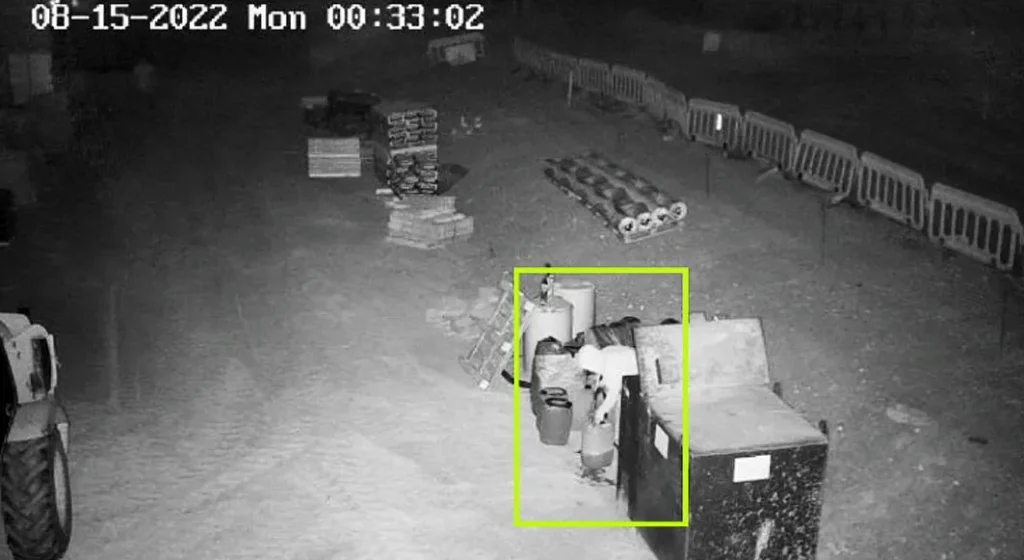
The value of round-the-clock monitoring is illustrated in Clearway’s work at a logistics site where a CCTV tower with 24/7 remote monitoring captured an attempted theft from a van in real time, allowing operators to alert police immediately and ensure the individual was identified. The same capability that stopped the theft applies directly to vandalism incidents on commercial sites and construction projects.
The practical effect for vandalism prevention is significant. Rather than reviewing footage the morning after an incident and contacting police retrospectively, a remote monitoring setup allows intervention during the incident itself. The distinction matters: deterrence and response, not just documentation.
The real advantage of modern CCTV systems is that they don't just record incidents. They allow monitoring teams to detect suspicious activity in real time and respond immediately. A visible security presence is often enough to prevent incidents before they happen. When intruders or would-be vandals see cameras and monitoring in place, most will simply move on to an easier target.
Speak to Clearway about remote CCTV monitoring for your sites.
Speak to the experts
Get an assessment
Get a quote
Using CCTV Footage as Evidence After a Vandalism Incident
When vandalism does occur, CCTV footage can be decisive in identifying those responsible and supporting a successful prosecution or insurance claim, provided the footage meets the quality standards required.
The Metropolitan Police has reported that digital evidence reduces investigation times by 75% and supports 96% conviction rates in cases where usable footage is available. For footage to reach that standard, several conditions must be met.
Image quality is fundamental. Footage must be of sufficient resolution to identify individuals clearly: their faces, clothing and any distinctive features. Low-resolution cameras, poor lighting coverage or cameras positioned at the wrong angle can render footage inadmissible or, at minimum, insufficiently useful for identification purposes.
Accurate timestamps are essential. If a system’s date or time is incorrect, or if there are gaps in the recording, the footage may be challenged in court. A documented chain of custody is also required: a log of who has accessed the footage, when and why, to demonstrate that it has not been tampered with. For a detailed breakdown of what makes footage legally usable, see Clearway’s guide to CCTV footage used in court.
GDPR and ICO compliance are not optional. Organisations operating CCTV must be registered with the ICO and must have a documented data retention policy. Footage should be retained only for as long as it is needed; most organisations operate a rolling retention period of between 14 and 31 days, with specific incident footage stored separately pending investigation.
For insurance claims, clear footage of an incident, timestamp verified and backed by monitoring logs, can significantly accelerate the claims process and reduce disputes over liability.
AI Analytics for Proactive Vandalism Detection
Standard CCTV records everything and alerts on nothing unless someone is actively watching. AI CCTV changes this by processing footage automatically, identifying behaviours that indicate a risk and sending alerts before an incident escalates.
inView Detect
inView Detect is Clearway’s rapidly deployable, wireless intrusion detection device. Designed for sites where permanent infrastructure is not practical, it can be installed quickly to provide immediate perimeter protection against unauthorised access, criminal activity and anti-social behaviour.
The system is portable and self-contained, making it suited to temporary deployments, vacant properties, construction sites, and locations with changing security requirements. When a breach is detected, alerts are triggered to the relevant monitoring centre or site contact, enabling a fast response before a situation escalates.
inView Detect is suited to a range of commercial environments: construction sites, car parks, commercial estates, industrial premises and vacant property. It can be integrated with existing camera infrastructure or deployed as part of a new installation.
inView CCTV Tower
For sites without mains power or permanent camera infrastructure, the inView CCTV Tower provides a self-contained, rapidly deployable surveillance unit. It is solar-powered and requires no groundworks, making it a practical option for construction sites, land holdings and temporary site operations where cabling and permanent mounting are not feasible.
Towers can be repositioned as site layouts change, ensuring coverage always reflects current risk areas rather than the layout at the point of initial installation.
Final Thoughts
CCTV is most effective as a vandalism deterrent when it is visible, actively monitored and capable of producing evidence-grade footage. A camera that records to an unmonitored hard drive provides a lower level of protection than one connected to a live remote monitoring centre with AI analytics flagging risks in real time.
Facilities managers and property teams responsible for commercial sites, construction projects and vacant property should assess not just whether cameras are present, but whether the overall system actually prevents incidents rather than simply recording them.
To discuss CCTV monitoring and AI analytics solutions for your sites, contact Clearway at clearway.co.uk/contact.
Frequently Asked Questions
Does CCTV actually deter vandalism?
CCTV deters vandalism by increasing the perceived risk of identification for anyone who approaches a site with intent to cause damage. Research shows that professionally installed systems reduce vandalism incidents by over 50%, because most vandalism is opportunistic and offenders will move on if they believe they are being watched and recorded. The deterrent effect is strongest when cameras are clearly visible, signage is displayed and the system is actively monitored.
Can CCTV footage be used as evidence for vandalism in the UK?
CCTV footage can be used as evidence for vandalism in the UK provided it meets specific quality and handling standards. Footage must be of sufficient resolution to identify individuals clearly, must include accurate date and time stamps, and must have a documented chain of custody showing it has not been edited or tampered with. The Metropolitan Police reports that digital evidence supports 96% conviction rates in cases where usable footage is available. For more on admissibility requirements, see Clearway’s guide to CCTV footage used in court.
What is the difference between standard CCTV and AI CCTV for vandalism detection?
Standard CCTV records footage continuously and requires someone to review it reactively, after an incident has occurred. AI CCTV analyses live feeds in real time, identifying behaviours associated with risk, such as loitering, perimeter breaches or movement in restricted areas outside normal hours, and generating alerts before damage is caused. Systems such as inView Detect allow monitoring teams or site managers to respond to a potential incident while it is still developing rather than reviewing footage the following morning.
How does remote monitoring help prevent vandalism?
Remote monitoring helps prevent vandalism by placing trained operators at a monitoring centre who watch live camera feeds, respond to AI-generated alerts and intervene when suspicious behaviour is detected. When an alert is triggered, operators can issue a live audio challenge through the camera’s speaker system, which causes most individuals to leave the site immediately. If the situation escalates, operators contact police directly with live footage and location information, enabling a faster and better-informed response than a standard alarm activation.
Do I need to register with the ICO if I install CCTV to prevent vandalism?
Any organisation that installs CCTV capable of capturing identifiable images of individuals must register with the Information Commissioner’s Office (ICO) and pay the annual data protection fee, which for most small and medium-sized organisations is between £52 and £78 per year. Organisations must also display signage indicating that CCTV is in operation, have a documented data retention policy, and ensure footage is stored securely. Full requirements are set out in the ICO’s guidance on CCTV for organisations.
Written by Daniel Meeajane
Business Development Director, Clearway Fire and Security
Daniel Meeajane is Business Development Director at Clearway Fire and Security, bringing strong commercial expertise alongside a detailed understanding of fire protection systems and industry standards.
Having contributed to a number of major projects and delivered successful outcomes, Daniel uses his knowledge and experience to drive awareness of effective fire protection solutions across a wide range of environments. His approach combines relationship-led business development with a clear understanding of technical compliance, operational requirements, and customer risk.
Daniel has a strong understanding of BS 5839-1, recognising the importance of compliant fire detection and alarm system design, installation, commissioning, and maintenance. He also keeps pace with the latest developments in fire technology, ensuring clients benefit from informed guidance, up-to-date solutions, and best practice across every stage of delivery.
CCTV surveillance cameras capture unusual movement, suspicious activity, event logs, foot traffic, and vehicles approaching or navigating your premises. But can you...
CCTV is one of the most effective preventatives against illegal entry, theft and damage to your property. Correct camera positioning determines whether...
It looks like you’ve submitted your information in the wrong section of our website. No problem—if you’re looking to apply for a job, you can do so by viewing our current vacancies. Click below to find and apply for roles through the proper channel.