Blog > I’m Working on a Housing Development and Need CCTV to Monitor Materials: What Are the Best Options?
I’m Working on a Housing Development and Need CCTV to Monitor Materials: What Are the Best Options?
CCTVSite Security
Written by Daniel MeeajanePublished: 21st September 2026Last update: 21st September 2026
Managing the delivery of high-value materials can significantly affect the security requirements of a housing development. Bricks, timber, cables, tools, fixtures, and other materials can be very valuable, making an otherwise relatively quiet development more attractive to opportunistic thieves.
One challenge is that housing developments change continuously. As new homes are completed and roads and access routes are developed, materials often need to move around the site.
The right CCTV needs to provide effective coverage while remaining flexible enough to adapt, which is why surveillance decisions need to be strategic.
Contents
Monitoring Housing Development Materials: Key Takeaways
Construction materials can be valuable and difficult to replace if lost, stolen, or damaged, which is why they are an important consideration for anyone planning security for a housing development.
Temporary CCTV, mobile CCTV towers and remote monitoring are among the options that can provide flexible surveillance without requiring permanent infrastructure.
The most effective approach often combines several security measures, such as installing CCTV cameras while also implementing physical security, which could involve mobile patrols, manned guarding, perimeter protection, and alarm responses.
Why Do Construction Materials Need CCTV Protection?
Housing developments almost always need to store materials, but the nature of that storage isn’t universal. Storage can be spread across different bays, temporary areas, or locations dotted throughout a site.
Materials are often most vulnerable to theft when sites are unattended overnight or at weekends. This is especially relevant where there isn’t a robust, fully monitored perimeter fence line, or where access routes are still being developed, and it is relatively easy to gain entry.
CCTV is typically one of the best ways to ensure site management teams have visibility over these areas, helping site supervisors and security teams identify suspicious activity and investigate potential incidents. High-profile surveillance can also deter crime, particularly when cameras or CCTV towers are clearly positioned around storage areas and access points.
However, installing cameras isn’t always enough, because security measures need to provide sufficient coverage and ensure there is a way to respond when anything untoward is detected.
What Are the Best CCTV Options for a Housing Development?
There isn’t one solution we might suggest for every site, but housing development management can consider several options, which we’ve summarised below.
Most Popular in 2026: PID’s
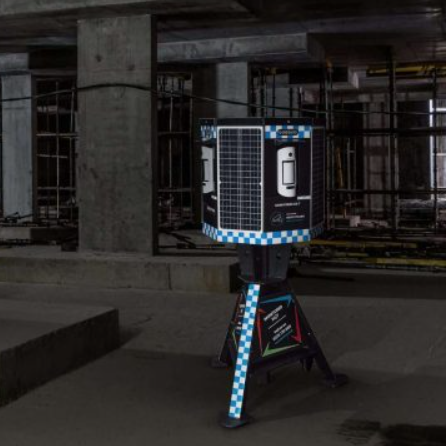
PIDS (Perimeter Intrusion Detection Systems) are electronic security setups that use sensors to detect unauthorised access at a site boundary. Not only do they detect – they respond when suspicious movement is sense and sound a loud warning via an internal speaker. PID’s security systems are being used on housing developments all over the UK and are great for their versatility (they can be moved anywhere as the site progresses). They also connect to an alarm receiving centre and capture footage on the off chance that someone ignores the siren and makes a play for your materials!
1. Temporary Construction Site CCTV
Temporary CCTV can be installed without permanent surveillance infrastructure. This makes it a good alternative to fixed CCTV for developments where the layout will change as the site progresses.
Cameras can be positioned around material storage areas, site entrances, temporary compounds and other vulnerable locations. As new plots are built or materials need to be moved, they can also be adjusted to maintain the same degree of coverage.
2. Mobile CCTV Towers
For larger housing developments, CCTV towers provide a wider field of vision than individual cameras positioned at ground level.
Towers can be positioned to supervise open areas, material storage zones, site boundaries and access routes, and can also be moved as the development progresses.
3. Remote CCTV Monitoring
If materials are stored on a site overnight, passively recorded footage may not provide the level of protection required. It can mean an issue isn’t identified until long after it occurs.
Remote CCTV monitoring enables our trained operators to assess activity as it happens and determine whether an incident requires intervention or an emergency response. Depending on the agreed procedures, security personnel, guards or emergency responders can then be deployed.
Get a quote
Speak to the experts
Get an assessment
Get a quote
4. CCTV With Video Analytics
Modern CCTV systems can incorporate video analytics configured to identify movement within specific areas or outside working hours, ensuring operators can focus on material storage zones or restricted access areas.
5. CCTV Combined With Mobile Security Patrols
CCTV provides visibility, but mobile security patrols ensure there is a physical presence.
Security officers can visit the development at agreed or randomised intervals, checking material storage areas, gates, boundaries and other vulnerable points. This complements CCTV by adding a physical layer of protection.
6. Manned Guarding
Ongoing manned guarding might be more suitable for particularly high-value materials or higher-risk developments.
Security officers can control access, patrol the development, monitor activity, and respond directly to suspicious behaviour, while ensuring there is a physical on-site presence when workers and contractors have left for the day.
Where Should CCTV Be Positioned to Monitor Materials?
There isn’t a standard layout that works for every housing development, but a professional assessment can help managers and supervisors consider where materials will be stored and how people and vehicles move around the site.
Some of the areas that may require attention during the risk assessment process might include:
Material storage compounds
Temporary storage bays
Site entrances and exits
Vehicle access routes
Perimeter boundaries
Areas containing high-value equipment
Temporary offices and storage units
Isolated or poorly overlooked areas
It’s also important to consider how the development will change. A camera providing excellent coverage now may become less effective when new buildings, hoardings or other structures are introduced.
The benefit is that, unlike a permanent CCTV installation that is designed around a finished site, mobile systems can be repositioned when security priorities change.
This doesn’t mean cameras need to be moved constantly, but it does mean the security strategy can evolve alongside the development.
What Type of CCTV Is Best for Monitoring Construction Materials?
The most appropriate system depends on the size and layout of the development, where materials are stored, and how the site is expected to change.
Temporary CCTV, mobile CCTV towers and remote monitoring can all be potential solutions where a site needs flexible surveillance.
Can CCTV Towers Monitor a Large Housing Development?
Yes, CCTV towers can provide wide-area surveillance across large outdoor spaces. This makes them suitable for housing developments with large boundaries, open land, or multiple material storage bays.
Should CCTV Be Combined With Other Construction Site Security?
In many cases, yes, a layered approach might provide more comprehensive protection for housing developments.
CCTV can, for instance, be combined with remote monitoring, mobile patrols, manned guarding, perimeter protection and keyholding, depending on the specific risks in question.
Written by Daniel Meeajane
Business Development Director, Clearway Fire and Security
Daniel Meeajane is Business Development Director at Clearway Fire and Security, bringing strong commercial expertise alongside a detailed understanding of fire protection systems and industry standards.
Having contributed to a number of major projects and delivered successful outcomes, Daniel uses his knowledge and experience to drive awareness of effective fire protection solutions across a wide range of environments. His approach combines relationship-led business development with a clear understanding of technical compliance, operational requirements, and customer risk.
Daniel has a strong understanding of BS 5839-1, recognising the importance of compliant fire detection and alarm system design, installation, commissioning, and maintenance. He also keeps pace with the latest developments in fire technology, ensuring clients benefit from informed guidance, up-to-date solutions, and best practice across every stage of delivery.
Managing the delivery of high-value materials can significantly affect the security requirements of a housing development. Bricks, timber, cables, tools, fixtures, and...
Traditional CCTV, alarms and systems need reliable power sources, but installing permanent electrical connections may be impractical, costly or impossible at the...
It looks like you’ve submitted your information in the wrong section of our website. No problem—if you’re looking to apply for a job, you can do so by viewing our current vacancies. Click below to find and apply for roles through the proper channel.